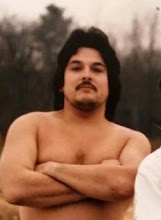
John Graybill's National Geographic Adventure Profile
– August 14, 2010Posted in: Aviation
 Since I put up my last post I’ve received several emails asking for the text of my 2001 article about John Graybill in National Geographic Adventure, since the link to that magazine’s website does not include the full text, I’m posting it here
Last Man Flying
By Jeff Wise
Meet John Graybill—legendary bush pilot, notorious poacher in Alaska’s Outlaw Wars, and, at 70 years old, the last of a dying breed.
It was a blustery Sunday afternoon in early December 1973, cold and overcast, when John Graybill took off from Alaska’s Kodiak Island. He and his 16-year-old daughter, Teri, had been visiting friends for the weekend, and now they were heading home to Anchorage in Graybill’s tiny Piper Super Cub.
Once airborne, Graybill turned north and flew over the whitecaps of Shelikof Strait. With winter setting in, daylight was scarce, and soon the plane was shrouded in darkness.
The Super Cub had been in the air for less than an hour when the engine started to sputter. Graybill, a seasoned pilot, brought the plane down beneath the clouds and began searching for a place to land.
On he flew through the darkness—until, ahead in the distance, he made out a single point of light, which turned out to be a fishing trawler. Nursing the ailing engine along, Graybill took the plane in as close to the ship as he could and managed a nearly impossible feat—setting down in 20-foot [6-meter] waves without flipping over.
As seawater poured into the mangled cockpit, Graybill and his daughter struggled out into the frigid ocean. Since he rarely flew over open water, Graybill didn’t carry life preservers or survival gear. He hoisted Teri up onto the tail and treaded water, fighting for air amid the pounding waves. As a deadening chill crept through his body, Graybill called up to his daughter to ask if the trawler was turning around. “No, Dad,” she replied. “It just kept on going.”
Gradually, the plane slipped beneath the surface, and the Graybills treaded water together in the darkness. “Dad,” Teri called out to her father. “Are we going to die?”
“Yes, honey, we are,” he answered. “I sure feel awful about getting you into this mess.”
“That’s OK, Dad,” she said. “I can’t think of anyone I’d rather die with than you.”
THERE’S A LOT OF DYING in John Graybill’s stories. Usually, the deaths are fast and violent, but sometimes they are long and lingering, and tinged with bitter irony. When the protagonist doesn’t die, he usually disappears for good, or, in the best of circumstances, escapes from imminent death by the narrowest margin. More often than not, the protagonist is Graybill himself.
It’s not that Graybill has a morbid turn of mind. It’s just that, after nearly half a century engaged in an impossibly dangerous occupation, you tend to see a lot of untimely endings. At 70, Graybill is one of the last of a dying breed ‑‑ a legendary bush pilot from the pioneer days of Alaskan aviation. In his case, “dying breed”isn’t just a turn of phrase. Once Graybill sat down with a piece of paper and made a list of all his friends who had died flying small planes in Alaska. He managed to come up with 53.
I’ve tracked Graybill down in hopes of finding a remnant of the old Alaska, the wild and lawless land that existed in the long‑ago days before statehood and the oil boom. As it turns out, Graybill is exactly what I’ve been hoping for — a grizzled, loquacious, affable old relic, a hunting, drinking, wildlife‑buzzing old outlaw who happens to be one of the best pilots anywhere. Stockily built, with sparkling blue eyes and a foxy grin, he exudes an understated outdoorsmanly confidence. He is a man of an age when there really was a frontier, when boys and young men grew up dreaming of the freedom and adventure of true wilderness. For 50 years, he’s been living it.
At the moment, I’m living it, too — at least, I’m along for the ride. I’m crammed into the back seat of Graybill’s Super Cub, cruising at 85 mph about 30 feet above the Alaskan Peninsula. We’ve spent the last two hours beating south out of Anchorage, skimming over tundra, startling bears and moose, buzzing through high mountain passes. I can’t help but notice what a flimsy plane the Super Cub is. It simplicity and low takeoff speed — just 30 mph ‑‑ are what have made it synonymous with bush flying, not its ruggedness. The cockpit is barely shoulder‑width wide and consists of thin metal sheeting fastened to a skeleton of tubing. The cloth‑covered wings are braced by a single pair of struts. Against the huge harsh landscape of the Alaskan landscape this underpowered craft seems as insubstantial as a mayfly.
It would be safer to fly at, oh, say, 300 feet, or 3000, instead of 30. But that would be boring. “I like to have something to look at,” he explains.
I do not, I must confess, share Graybill’s cheerful sang froid. In fact, as we bounce around in the air currents, my stomach is churning. At one point I notice that the gas gauge is getting toward the bottom. I ask him, trying to be indirect, what the range of the Super Cub is. “Oh, about here,” he says.
He’s just kidding, I guess. But then, about forty minutes later, the intercom crackles to life as we pass over a huge lake.
“I ran out of gas over this lake one time,” he says.
“No kidding,” I say, eyeing the waves below us. It’s a good ten miles to shore, and the water’s probably 35 degrees.
Soon, I’m sure, he’ll tell me all about it.
John Graybill grew up in Ann Arbor, Michigan and spent his boyhood tramping through the backwoods and reading boys’ adventure tales — Call of the Wild, White Fang, “anything with wolves in it,” he says. There was a lot of outdoors around, but it wasn’t enough; he longed for a newer country, one with blank spots on the map. Too young for the big drama of World War II, he figured he was going to have to find his own adventure instead.
In 1950 he married his high school sweetheart, Dolly. Soon afterward he announced to her that were pulling up stakes. “He had read a great deal about Alaska,” Dolly recalls, “and he’s of course a hunter, so he wanted to go to Alaska to see what it was all about.” So they did. He quit his job as an apprentice tool and die maker, bought a camper, hitched it behind their car, and drove all the way to Fairbanks over the whole muddy length of the newly built and still unpaved Al‑Can highway.
Wilderness was what John was looking for, and wilderness was what he found. Fairbanks was just a village then, an outpost of ten or twelve thousand souls in the middle of nowhere. “There were no paved streets,”Graybill recalls. “When we came into the town it was under a pall of dust that you couldn’t believe.”
John worked as a dishwasher in Fairbanks and tried to scrape together some money. He ached to get out there in the back country. He bought a boat and explored the lakes and rivers, then traded it in for a tracked vehicle. “That was a loser,” he says. “You worked on it for ten hours to run it for two. Finally it dawned on me: if I was going to see the parts of Alaska I wanted to see, I just had to learn flying. I bought a plane right off the bat. It took every penny we had.”
Over the years, Graybill flew over pretty much the whole country, hunting caribou in the north slope, brown bears on the Alaskan Peninsula, crossing the Bering Sea to shoot polar bears in the shadow of the Russian coast. Usually he carried customers — fishermen and hunters – but he also went after game solo. In those days there was a $55 bounty for each wolf. Spotting a pack from on high, he’s swoop down at ten feet, the stick between his knees, his elbow on the clutch, and aim a shotgun out the open door. He’d kill as many of the pack as he could before they ran into the timber, then land and skin the carcasses on the spot. It was a fast way to make money, but dangerous. Turn too sharply, too low, and a plane would enter what came to be called the “wolf hunter’s stall.” He lost a few friends that way.
Then times started to change. Alaska became a state in 1959. Eight years later, oil was discovered on the North Slope. The construction of the pipeline to Valdez drew in tens of thousands of newcomers. Anchorage, where the Graybills moved in 1965, grew from a town of 40,000 to a city of half a million. Gone were the days when every pilot in Alaska knew every other and all business was done on a handshake. Gone were the crude morals of the frontier. One by one the bars that once formed a continuous strip along Second Avenue in Fairbanks were closed down, until only a few stragglers remained. Civilization was coming to Alaska.
The wilderness changed, too. “There used to be herds of moose up in the Maclaren Valley,” 100 miles east of Denali, Graybill recalls. “It was unbelievable. All the trees would be golden in their fall color, and you’d come over the top of the hill and see a sea of white antlers, shining almost a fluorescent white. There were bull moose everywhere. Now, you can set up there with binoculars for hours and you might see one or two.”
For years, guides and their clients had been spotting trophy animals from the air, setting down, hiking over, and shooting their prey. This had always struck some as unsportsmanlike, but now that the wildlife was dwindling people were getting upset. The government began shortening the hunting seasons and tightening the regulations. By the 70s, “same day airborne” regulations were in effect, banning hunting and flying on the same day.
With a few strokes of bureaucrats’ pens, John Graybill and most other guides in Alaska became criminals. And so began the Outlaw Wars. For the next dozen years, state and federal wildlife agents hounded wayward guides relentlessly. Graybill was one of the biggest trophies of all. “John was bold and bigger than life, and he could fly an airplane like you couldn’t believe,”recalls JW Smith, a former special agent with the US Fish and Wildlife Service. “But he was also a significant poacher, and the state really had a hard‑on for him.”
“We chased him continuously,” says retired Fish and Game pilot Wayne Fleek. “We suspected, and sometimes proved, that he did just about everything you can think of involving illegal hunting. It didn’t matter if it was winter or summer, the arctic or way down in the Gulf of Alaska. He covered the whole state.”
Those were wild times, and today the old‑timers remember the battles and the long losing war with a mixture of notalgia, awe, and bitterness. To meet Graybill’s cronies I fly with him down to Iliamna, at the base of the Alaskan peninsula. Set on the shores of the state’s largest lake, surrounded by countryside teeming with wildlife, the town is the ultimate hub of all Alaskan hunting and fishing guides.
Everybody hangs out in the airport lodge, a linoleum‑floor prefab building with a mastodon femur on the shelf by the door and caribou antlers nailed to the walls. A half‑dozen weatherbeaten pilots are sitting around watching the “Price is Right” on the satellite TV when Graybill walks through the door.
The gang pulls a mess of metal chairs around a formica‑topped table and the waitress brings coffee. They’re all guides, making their living flying hunters all over the peninsula looking for moose, bear, Dall sheep. It’s getting harder and harder, everyone agrees. “Wildlife has been declining for the last 15 years,” says old‑timer Larry Bryant. “There’s more hunters, and the wolves are taking their share, too. This season I had to burn 500 gallons of gas to find four legal rams.”
The conversation turns to the good old days. They talk about the magnificent animals they hunted, and the game wardens who chased them in turn. Graybill remembers the time his friend Rick killed and skinned a bear, then flew back for the hide the next morning. In the meantime a game warden had found the carcass and lain in wait for him through the freezing night. When Rick landed, the warden popped out of the bushes and arrested him.
Rick could see he was hypothermic. “My gosh,”he said. “We got to get you in to a doctor.”
So they loaded the bear hide into the plane and climbed in after. Rick told the warden that the tail was stuck, and asked him to get out and push it around. The warden hopped out, pushed the tail around, and Rick took off, leaving him standing there.
The old tale earns fresh laughter. The guides swap more stories and drink more coffee. Outside the gray sky continues to drop a cold drizzle. After a while one of the younger guides approaches Graybill. “I heard they used to have a wanted poster with your face on it,” he suggests.
Graybill laughs. “There’s a lot of stories about me,” he says. “Some of them are even true.”
There’s one flyer in the area whom even Graybill considers legendary, a 75‑year‑old Battle of the Bulge veteran named Jack Foldager. For the last 25 years he has made his home in a cabin in the woods 35 miles south of Iliamna. “He was out with some hunters, they got drunk, accidentally shot him in the leg,” Graybill says. “After a few days, he says, ‘this is starting to go gangrenous, you boys have to cut this leg off. ‘They said, ‘No, no, we can’t do that. ‘So he had to cut it off himself.”
By the afternoon the rain has stopped, so we decide to pay old Jack a visit. Foldager’s got his own back‑country airstrip, really just a 150‑yard stretch of pebbly dirt worn into the tundra. The wind is gusting to 40 knots as we bob and bounce our way down towards a landing, and it seems pretty clear that we’re going to smash down about twenty yards short, but at the last second we settle into a cushion of clean air and glide into a smooth landing. Foldager’s sitting in his cabin, smoking a cigar in a thick haze of smoke, watching an NFL game on satellite dish.
When I recount Graybill’s story, he waves it away. “That leg was blown almost clear off, anyway,” he says. “The bone was completely crushed. It was just kind of hanging there, just flopping all over. That’s all it was doing.” After two days, Foldager realized that it was gettting gangrenous, so he cut through what smell shreds of flesh were left. By the third day one of his clients managed to walk across the island to a small settlement and radio the mainland for a rescue plane.
The stories that Foldager tells are a lot like the ones Graybill tells. It’s hard to figure out who’s crashed the most planes. Both have lost count.
“This is not bragging, but at one point I thought I was a hell of a SuperCub pilot,” Foldager says. “But I’ll tell you, John will do things that I’m not so sure I wouldn’t back up from.”
The men talk about their run‑ins with the law. Graybill tells the story about the time Fish and Game spotter aircraft came upon him as he was field‑dressing a bull moose for a pair of German clients. His plane was parked nearby, so it was obviously a case of same‑day‑airborne. “It looked like a scene from WWI, there were so many planes circling around,” John says. “And I knew I was caught, so I just set there. Pretty soon they landed a plane on a lake way down in the valley, way down, and two game wardens started walking up the hill.”
Graybill knew that the state was going to confiscate his plane. He’d already lost two that way, and he couldn’t bear to see them take a third. So he soaked a rag in gasoline, lit it, and threw it in the front seat. The clients who didn’t speak a word of English, looked on in horror, certain that Graybill had lost his mind. By the time the wardens arrived, the plane was a smoking heap of debris.
It was now late, and the rangers’ plane down in the lake too far to reach before nightfall. The temperature was plummeting. The wardens pitched a small tent and let Graybill’s two clients squeeze in with them. Graybill was left outside. “They went in their little tent, and I sat outside in the rain and the wind. It started spitting snow,”he recalls. “It was really cold, and boy, my teeth were chattering, and finally I thought, well, what the heck, they can’t shoot me, so I just crawled in on top of everybody and burrowed in like a rabbit in a briar patch.”
In the end, not only did the government nail him for poaching, but they tried to get him with destroying government property, too. He managed to beat that rap, but there were more to come. By 1988, Graybill says, he was tired of fighting. After a final wolf‑hunting case that year, “I kind of fell in line,” he says. “To tell you the truth, I’d beat my head against the wall long enough. It finally dawned on me they were smarter.”
Some of his former nemeses, it turns out, aren’t so sure. Wayne Fleek, who left the force in 1986, tell me later: “I retired, and he kept right on going. If he still has access to an airplane, and he’s still walking around, he’s still hunting illegally. He’s not the type to change.” (That may be so, but I never see him breaking any laws.)
Graybill has a cabin near Foldager’s, and he and I putter around there for a few days. One morning we fly down to the Pacific coast, circling over brown bears and huge flocks of ptarmigan. The next we take some fishing rods over to a stream near the cabin. The water’s thick with rainbow trout gathered for the red salmon spawn and I land a 20‑inch beauty on my first cast. Graybill climbs out onto a rock and chucks out his lure. He stands there for a while, blinking into the freshening gale.
He’s not much of a fisherman, but he’s trying to learn to like it. He still hunts from time to time, legally, but his heart isn’t in it like before. Nowadays, he says, he’d just as soon let an animal live. There’s a tiny bat that’s taken up residence in the outhouse, wedged between the door and the frame. Each time I head over there, John tells me to be careful not to hurt it.
There’s a little squirrel that lives in the woods nearby, and is quick to scamper up the tree stump when Graybill sets out fish guts or plate scrapings after a meal. “That’s a cute little fella,” he says one morning. “I just don’t have the heart to shoot him. You’re going to have to do it.”
I ask why it’s necessary to shoot him at all. “Oh, he’ll gnaw a hole through the cabin wall over the winter and make a mess,” he answers. But in the end we just let him be.
By now it’s the second week of October. Winter is coming in. It’s been blowing hard all week: 30, 40, 50 miles an hour. We spend a lot of time sitting in the cabin, listening to oldies radio and talking about flying. The most dangerous place in Alaska for Super Cubs, Graybill tells me, is a spot called Merrill Pass, about an hour and a half from here. Once you start flying in, the valley walls are so high and narrow that there’s no room to turn around. If the weather changes halfway through, that it’s. The rocky floor is littered with wreckage. Just two weeks ago another plane went down up there.
“One time I was flying through there and I hit a terrible downdraft,” Graybill says. “I fell 400 feet before I could stop falling, and I damn near hit the deck. As I was pulling up I looked around and saw the wreckage all around me and I thought: ‘Oh, so that’s what happened to ‘em.’”
Graybill wants to show me the pass, but it’s fogged in for a week, and finally a hard frost hits. Up at altitude the passes are snowed in, the debris covered over. We decide to make a run for it back to Anchorage over a lower and wider pass. It’s a wild ride, even so. The turbulence bounces us around like a yoyo on a string. But the beauty of the high mountain pass is otherworldly, with sprawling fields of boulders set amid snow‑capped peaks and jumbled glaciers glowing as blue as Neptune.
In two hours we’re back in Anchorage, circling over a cozy suburb of quiet lanes and semicircular driveways, a place that would pass for a typical American suburb anywhere. John and Dolly raised five children here, now all grown up and moved away. John pulls the plane around in a steep bank and drops us on the end of the runway behind his house. When we come through the door Dolly’s in the kitchen making blueberry shortcake.
Most wives, it would seem to me, would get a little anxious if their husbands were two days late coming back from a wilderness trip. Especially if that trip entailed flying around arctic gales in a flimsy two‑seater. But Dolly Graybill is as imperturbable as a clear blue sky. Chipper and bubbly, she instantly strikes me as so good natured that I wonder if she isn’t hiding something. While John’s occupied with some chores I take the opportunity to sneak down to the laundry room while she’s doing the wash for an impromptu interview. Doesn’t she worry, I ask? Doesn’t her blood run cold when she thinks about all his contemporaries who have died?
“Yes, you worry,”she says. “But John’s a good pilot.”
I press her, but without much luck. It’s not that she doesn’t want to talk about it. It’s just that there isn’t really much more to say about it than that.
One day, while we were in the cabin, John had mentioned off‑handedly that he sometimes has a drink with one of the game wardens who used to chase him all over the state. Apparently, he lives in the next town over. Now that we’re back in civilization, I press him to arrange a meeting. It doesn’t take much elbow twisting; he grabs the cordless and dials Jim Nutgrass’s number.
We meet at a nearby family restaurant. Nutgrass, a retired Fish and Game captain, shows up with his young, blonde wife, and everyone orders big plates of eggs and biscuits and bacon.
It’s an astonishingly amiable meeting, given that for the better part of two decades Nutgrass chased Graybill relentlessly. “He haunted me,” Graybill says. But today the two men recount the long years of pursuit and prosecution with no more animosity than two retired quarterbacks might reminisce over their old games.
“I like John. He’s a likeable person, “Nutgrass declares. “He was always a gentleman. He’s damned knowledgeable, and he’s a hell of a pilot. It’s just that John likes to hunt, and when he does, sometimes he gets in trouble.”
If anything, it’s Nutgrass who seems remorseful. To win the Outlaw Wars the state had to adopt some unsportsmanlike tactics. Alaska’s too big a country to patrol effectively, and it was no use expecting customers to give evidence. So the state turned to subterfuge, planting undercover agents and inducing guides to turn state’s evidence on their partners. It went against the honor code of the frontier.
“I got paid to do a job, and I did the best job that I could,” Nutgrass explains. “I could just as easily have gone into guiding as I did into working for the state.”
Graybill and Nutgrass swap stories — many of them the same ones I’ve already heard at Iliamna, though they receive a different emphasis when Nutgrass tells them. Then Nutgrass starts talking about Graybill’s former partner, Pete Owens. I’m surprised that John has never mentioned Owens, given their half-dozen years of working together. Owens, it turns out, was something of a loose cannon. He painted their planes in camouflage, and he was rude to agents, which only made the state want to bust him and John even more. Worse, from Graybill’s point of view, is that unknown to him Pete was informing against him the whole time, having cut a deal with Fish and Game in order to beat previous poaching charges. I gather from John’s expression that some of the things that Nutgrass is telling him are details he hadn’t gleaned before. I sense he’s feeling a little sick.
I pick up the check, and we all file out to the parking like to say goodbye. John and Jim make noises about getting together for a drink soon.
After we get in his car to drive home John is uncharacteristically quiet. I thought that it was all water under the bridge, that the game was played and the handshakes shook. But it isn’t. “It’s a lot easier to be gracious,” he says, “when you’re the guy that won.”
For the rest of the ride home, John doesn’t say a word. I’ve never before experienced silence in his presence. It’s unnerving.
John offers to try another run at Merrill’s pass in the morning, but I’ve had my fill. After the long and dangerous flight from Iliamna, and all the stories of death and dying, the snugness of civilization feels flimsy, provisional, but I am grateful for it.
Amid the luxuries of hot showers and central heating, I think about all the times Graybill has nearly killed himself: About the time he ran out of gas over Iliamna Lake and managed to glide down to an emergency landing on an uninhabited island. About the time he flew his plane straight into a set of high‑voltage transmission lines in the dark, and managed to land the aircraft wrapped in frayed power cables. About the time he got lost in the clouds and flew into the side of a mountain at full speed, trashed his airplane, and walked away unscathed. And about all his other brushes with death.
I wonder how John sees his life ending. After nearly a half century of beating the odds, Graybill’s remaining contemporaries are starting to succumb to earthbound ailments: emphysema, cancer, stroke. Graybill doesn’t like to talk about his health, except to say that he’s doing fine. But he is wracked by recurring back pain, and at times he seems shaky. Every year he has to pass an FAA physical to be certified as flight‑ready. So far, he’s passed each time. That’s all he needs, or wants, to know.
That evening, as we’re sitting around the dinner table, and I ask him what he’s going to do when the time comes to retire his wings.
“I can’t even think about it,”he says. “It’s a fate worse that hell. I went down to Florida one time with the wife, and it was just a bunch of old wrinklers waiting to die. Not smiling, not laughing, nothing.”
It speaks to the quantity of Graybill’s brushes with death that he can’t even begin to tell you how many airplane wrecks he’s been in. It’s not until we’ve finished eating that he remembers to tell me the story about how he and his daughter Teri ditched in the Shelikoff Strait.
Okay, I ask him. So how did you get out of that one?
“Well,”he says. “Out of the darkness, a beam of light appeared. It was the fishing boat — it had seen us, but it had taken a long time to turn around. They lowered ropes and pulled us up. For the life of me, I couldn’t figure out how they had found us in the dark, with all those waves. Then I looked down from the deck, and saw a glow in the water. The strobe on the tail was still flashing.”
Some people might shudder at such a memory, or try to erase it. John Graybill sits there beaming, as if life is never quite so sweet as when it’s a hair’s breath away from ending.
“Damn, it’s a neat world,”he says. “It’s a big world, a great world. I love every minute of it.”

